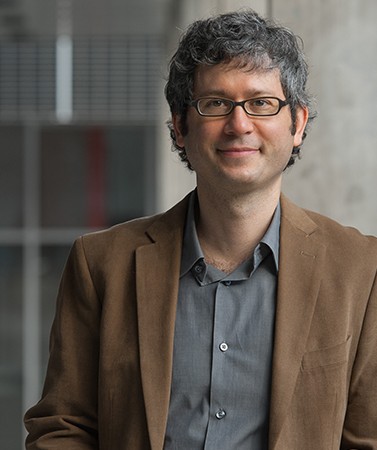
Eric Margolis

Professor
location_on Buchanan E 380
Office Hours
2025W term 2: Office hours on Zoom and change week to week. Please visit Dr. Margolis' website for up-to-date information
Education

Ph.D. Rutgers University


About

Please visit Dr. Margolis’ website for up-to-date information.

I am a professor of philosophy at The University of British Columbia. I received my PhD from Rutgers University and held appointments at Rice University and the University of Wisconsin before coming to UBC in 2008. My research is largely concerned with the nature of human concepts. I am interested in the way that concepts allow us to represent the world and in the innate features of the mind that make the human conceptual system possible. For a free electronic copy of my book The Building Blocks of Thought: A Rationalist Account of the Origins of Concepts (Oxford University Press), please visit PhilArchive.org or Oxford Academic.


Teaching


Research

Philosophy of cognitive science and philosophy of mind. My research focuses on questions that arise at the intersection of the philosophy of mind and the cognitive sciences. I am especially interested in the developmental origins of the human conceptual system, the relationship between language and thought, and the explanation of distinctively human cognition. I am also interested in the implications of this work for questions about general philosophical methodology.


Eric Margolis

Professor
location_on Buchanan E 380
Office Hours
2025W term 2: Office hours on Zoom and change week to week. Please visit Dr. Margolis' website for up-to-date information
Education

Ph.D. Rutgers University


About

Please visit Dr. Margolis’ website for up-to-date information.

I am a professor of philosophy at The University of British Columbia. I received my PhD from Rutgers University and held appointments at Rice University and the University of Wisconsin before coming to UBC in 2008. My research is largely concerned with the nature of human concepts. I am interested in the way that concepts allow us to represent the world and in the innate features of the mind that make the human conceptual system possible. For a free electronic copy of my book The Building Blocks of Thought: A Rationalist Account of the Origins of Concepts (Oxford University Press), please visit PhilArchive.org or Oxford Academic.


Teaching


Research

Philosophy of cognitive science and philosophy of mind. My research focuses on questions that arise at the intersection of the philosophy of mind and the cognitive sciences. I am especially interested in the developmental origins of the human conceptual system, the relationship between language and thought, and the explanation of distinctively human cognition. I am also interested in the implications of this work for questions about general philosophical methodology.


Eric Margolis

Professor
location_on Buchanan E 380
Office Hours
2025W term 2: Office hours on Zoom and change week to week. Please visit Dr. Margolis' website for up-to-date information
Education

Ph.D. Rutgers University

About keyboard_arrow_down

Please visit Dr. Margolis’ website for up-to-date information.

I am a professor of philosophy at The University of British Columbia. I received my PhD from Rutgers University and held appointments at Rice University and the University of Wisconsin before coming to UBC in 2008. My research is largely concerned with the nature of human concepts. I am interested in the way that concepts allow us to represent the world and in the innate features of the mind that make the human conceptual system possible. For a free electronic copy of my book The Building Blocks of Thought: A Rationalist Account of the Origins of Concepts (Oxford University Press), please visit PhilArchive.org or Oxford Academic.


Teaching keyboard_arrow_down
Research keyboard_arrow_down

Philosophy of cognitive science and philosophy of mind. My research focuses on questions that arise at the intersection of the philosophy of mind and the cognitive sciences. I am especially interested in the developmental origins of the human conceptual system, the relationship between language and thought, and the explanation of distinctively human cognition. I am also interested in the implications of this work for questions about general philosophical methodology.