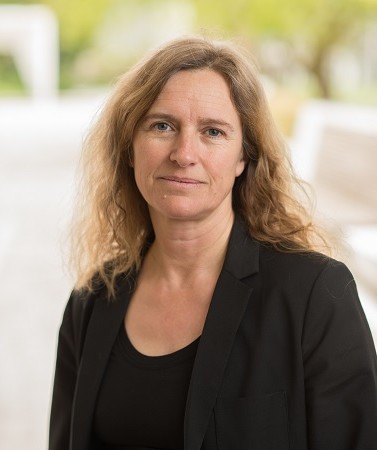
Sylvia Berryman
Office Hours
2026W term 1: Tuesday & Thursday, 11:00am - 12:00pm | In person or on Zoom | Also available by appointmentResearch Area
Education
Ph.D. University of Texas–Austin
About
Sylvia Berryman is Professor of Philosophy at UBC. Her early work on problems of natural philosophy in the Aristotelian school culminated in a monograph, The Mechanical Hypothesis in Ancient Greek Natural Philosophy (Cambridge 2009), detailing the impact of the development of ancient Greek mechanics on concepts in natural philosophy. Drawing on study of the philosophical impact of Hellenistic research in medicine, optics, chemistry and mechanics, Berryman argues that ideas from mechanical technology shaped ancient Greek concepts of causal transmission, the elasticity of matter and the mathematization of natural philosophy. She argues that a ‘mechanistic’ world picture is a historically situated notion, grounded in empirical discovery about the workings of the natural world. A further monograph, Elasticity and the Power of the Void, in progress, develops the philosophical implications of ancient Greek pneumatic technology. Berryman is the author of the Stanford Encyclopedia of Philosophy entry on Ancient Atomism, offering a crosscultural comparison of traditions of thought on indivisible smallest parts in Indian and Islamic academic thought.
A second research project concerns the conceptual foundations of Aristotle’s ethics, arguing that Aristotle is a Gricean constructivist. Against those who doubt whether Aristotle ever engaged with metaethical questions, and those like Bernard Williams who read Aristotle as appealing to human nature as an ‘Archimedean Point,’ Berryman offers an alternative reconstruction of Aristotle’s metaethical reasoning. Aristotle’s ethical treatises begin with a deep reflection on the notion of agency, introducing the notion of a practical good, that is distinct from the natural good of the movement of nonhuman animals. In several articles and a monograph, Aristotle on the Sources of the Ethical Life (Oxford 2019), Berryman argues for the sui generis nature of the practical good in Aristotelian thought. A monograph in progress, Aristotle and Socrates, further explores Aristotle’s imaginative relationship to the enigmatic figure of Socrates. The Socratic paradox, that no-one does evil willingly, served as the starting point for Aristotle’s notion that action is inherently committed to the pursuit of the good. At the same time, the historical Socrates inspired Aristotle’s notion of the phronimos, a practically wise person offering innovative yet convincing assessments of the right response to particular cases.
Berryman’s current project, Toxic Virtues and British Imperialism, takes Aristotelian virtue ethics into a different historical period. Taking inspiration from Hannah Arendt and Kwame Anthony Appiah on the use of historical material as a starting point for ethical theorizing, Berryman examines authors from Victorian Britain who—like Socrates—rearticulated the demands of traditional but vague virtue concepts for their time and place. The Victorian use of virtue concepts to support imperialism raises the possibility that our changing and local understandings of the demands of more general virtue concepts like ‘courage’ could have negative impacts. Examining ten cases of virtue ideals from the period with problematic effects on imperial practice, Berryman looks for structural features of virtue narratives that went badly wrong.
Berryman teaches undergraduate and graduate courses in ancient Greek philosophy, ethics, and social-political philosophy. Popular courses include ‘The Philosophy of Aristotle’, ‘Introduction to Ethics’, ‘Aristotle’s Ethics’ and ‘Power and Oppression’. Berryman’s Majors and Honours Seminars include the Philosophy of Iris Murdoch, the Philosophy of Hannah Arendt, Aristotle’s Ethics, Toxic Virtues and Moral Revolutions. With Professor Fatema Amijee in 2023, she team-taught UBC’s first seminar on Philosophy in the Islamic World. Between 2009 and 2024, Berryman lead eight UBC global seminars on location in Guatemala, studying contemporary moral problems and theories of power and oppression. Six UBC undergraduate groups, co-organized with Professor Thomas Kemple (sociology), studied globalization, poverty, civil society and political theory on location in Quetzaltenango, El Palmar, Nebaj and Antigua Guatemala. Berryman is currently developing a syllabus for Philosophy’s Power and Oppression course to focus on British Columbia’s colonial history and relationships with Indigenous peoples.
Berryman’s service and outreach activities at UBC include participation in Science and technology Studies research group, Practical Wisdom research group, and serving as Faculty Advisor/volunteer teacher for UBC’s HUM outreach programme for low-income people in the Downtown Eastside.
Teaching
Research
Ancient Greek philosophy, ancient Greek natural philosophy and science, Aristotelian ethics, ethics and global poverty. I have written on the intersections between ancient Greek natural philosophy and natural sciences, including mechanics, medicine, optics, physics and theory of mixture. Although I have written on topics ranging over the entire period of Greek antiquity, many individual research papers concern the role of Hellenistic science on natural philosophy, especially that of the Aristotelian school. This culminated in a 2009 monograph on the impact of ancient Greek mechanics on ideas about causation and explanation of the natural world.
Publications
- ‘The Gods and the Machine: Ancient Automata and Divine Causation,’ 143-62 in William Wians and Robert Hahn (eds), Materia Philosophiae (Brill, 2025).
- ‘Devising Nature,’ in Maria Gerolemou, Tatiana Burr and Isabel Ruffell (eds), 380-91 in Technological Animation (Oxford University Press, 2024).
- ‘Aristotle’s New Clothes: Mechanistic Readings of the Master Teleologist,’ Apeiron: a journal for ancient philosophy and science (2021), 537-55.
- ‘The Clockwork Universe and the Mechanical Hypothesis’, British Journal of the History of Philosophy (2020), 1-18.
- ‘How Archimedes Proposed to Move the Earth,’ Isis 111,3 (2020), 1-6.
- ‘Is Global Poverty a Philosophical Problem?’ Metaphilosophy 50,4 (2019), 405-420.
- Aristotle on the Sources of the Ethical Life (Oxford 2019).
- ‘Aristotle in the Ethics Wars,’ Review of Metaphysics 71, 4 (2018), 617-42.
- ‘On a Curious Passage in Eudemaian Ethics ii 6,’ Ancient Philosophy 38, 1 (2018), 1-14.
Presentations
- ‘Plato, Benjamin Jowett and the British Empire,’ Northwest Ancient Philosophy Workshop, Pocatello Idaho, Sept 2025
- ‘Aristotle and Socrates,’ Northwest Ancient Philosophy Workshop, Seattle, September 2024
- ‘Conflicting Demands, Ethical Mistakes and Practical reason,’ keynote speaker for Innovating Failure, Providence Health Care Annual Ethics conference, Vancouver April 2023
- ‘Practical Reason and the Centrality of Aristotle’s Phronimos‘, Northwest Ancient Philosophy Workshop, October 2022
- ‘Aristotle on Knowing the Good,’ Stanford-Tartu workshop on Knowledge and Value, Stanford, April 2022
- ‘New Arguments about Void from Pneumatics,’ London Ancient Science Workshop, London UK, February 2022
- ‘Mechanical Dreams’, Western Canadian Philosophical Association, Victoria BC, November 2021
- ‘Aristotle’s Metaethics…and other Historical Monstrosities,’ Symposium of Aristotle, Universidad Federale do Rio de Janeiro, June 2021